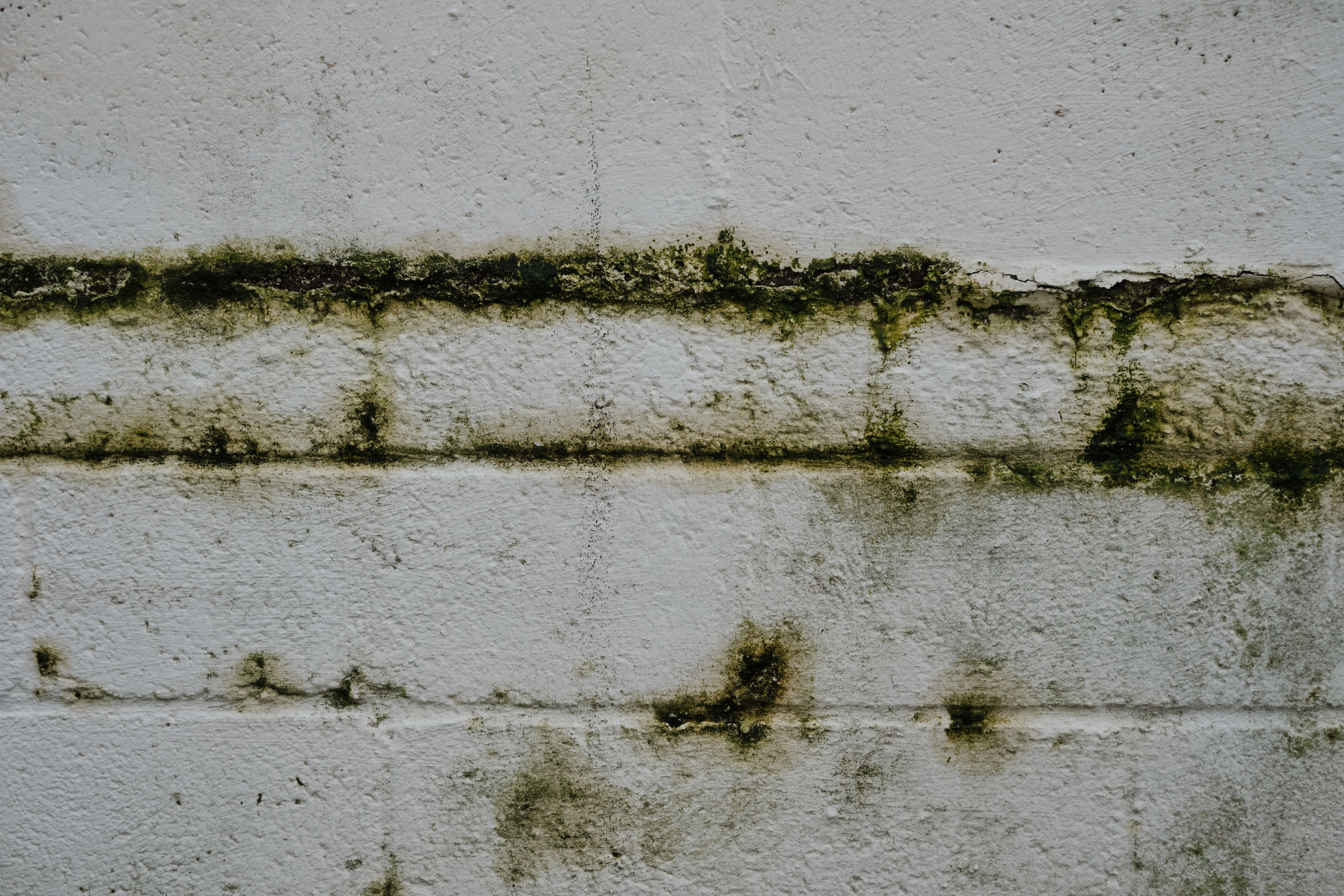
Baltimore's older housing stock — brick rowhomes and homes with stone or block foundations — sits against groundwater that pushes through aging foundations. Combined with humid summers and finished basements that trap moisture behind drywall, basements here are the most common place mold takes hold.
Baltimore's most common mold problem
Basement Mold: Baltimore's Most Common — and Most Fixable — Problem
Basements are where mold starts in most Baltimore-area homes. They sit below grade, against the earth, where groundwater pressure, humidity, and condensation collect. A finished basement hides the problem behind drywall until a musty smell or dark spots appear. The good news: basement mold is also the most straightforward to fix permanently once the water source is addressed.
The process
How Basement Mold Works, Step by Step
- 01
Find the Water Source
Basement mold always has a water source: foundation seepage, a sump pump failure, condensation on cold walls, a plumbing leak, or humid air meeting cool concrete. We find it first — no basement fix lasts without this step.
- 02
Remove Contaminated Material
Drywall, insulation, carpet, and baseboards that mold has grown into are removed and bagged under containment. Concrete and block walls are scrubbed and treated to remove the growth at its root.
- 03
Dry the Structure
Commercial dehumidification pulls the remaining moisture out of framing and concrete. A basement that is genuinely dry — not just surface-dry — will not support new mold growth.
- 04
Prevent Return
We address the water source permanently: sealing foundation cracks, recommending drainage or sump improvements, and controlling humidity so the basement stays dry and your finished space is protected.
Local context
Basement Mold Looks Different in Every County
The moisture source that feeds mold in a Baltimore rowhome is not the same as the one in a Montgomery stone foundation or an Anne Arundel crawlspace. See how this service applies where you live.
Ready when you are
Request Your Basement Mold Assessment
Describe what you're seeing and we'll take it from here.
Basement Mold — Frequently Asked Questions
Mold in a basement does not stay in the basement. Spores travel upstairs through stairwells, HVAC systems, and stack effect (warm air rising). Prolonged exposure can cause allergy symptoms, respiratory irritation, and headaches, especially in children, older adults, and anyone with asthma or sensitivities.
Not necessarily. Only the materials that mold has actually grown into need to be removed. We contain the area, remove the contaminated drywall or insulation, treat the structure, dry it completely, and then the basement can be safely refinished once the water source is corrected.
Three things: stop the water source (seal seepage, maintain the sump pump), control humidity (a dedicated basement dehumidifier), and ventilate. A basement that stays below 50% relative humidity and has no water entry will not grow mold.
The moisture source won't fix itself.
Wherever you are in the Baltimore region, the first step is the same: find the water. Request your assessment today.
Request Your Assessment